Compare before switching
Is a fish audio alternative ai voice option right for you?
A fish audio alternative ai voice search is easier to resolve with the same script, voice brief, and revision test across tools. This guide gives you a practical way to compare options without assuming that a different generator will automatically sound better or cost less.

total-cost table
Build a comparison worksheet rather than judging tools by a headline price. Record these costs for the amount of audio you actually plan to publish.
- fish audio vs elevenlabs reddit Use this focused comparison to organize the questions you would ask when weighing Fish Audio against ElevenLabs.
- fish audio for voice generator Check which voice-generation tasks matter to your project before estimating how much usable audio you need.
- how to use fish audio Map the steps in your current workflow so you can count preparation and revision time alongside any stated usage limits.
where quality differs
A polished demo is not a controlled test. Give each candidate the same material and listen for problems that would survive into your finished project.
-
1
Hold the script constant
Prepare a short passage that resembles your real work: include a name, a number, a question, and a sentence with an intentional pause. Use the same wording for Fish Audio and each alternative. If a tool offers pronunciation or delivery controls, note what you changed; otherwise, you may mistake extra manual tuning for better default quality.
-
2
Judge the usable take
Listen on the devices your audience uses. Mark mispronounced words, unnatural emphasis, clipped endings, inconsistent loudness, and moments when the voice stops sounding like the same speaker. Compare the best take you could reasonably reproduce, not just a favorite sample from a gallery. For recurring narration, consistency across several passages may matter more than one striking sentence.
-
3
Count every repair
Record how many regenerations, script rewrites, pronunciation fixes, and audio edits it takes to reach a publishable result. A voice that sounds impressive on the first line can become the slower option if it needs repeated repairs. Keep your notes beside the cost worksheet so that quality and effort are evaluated together rather than as separate impressions.
where time differs
Compare the path from approved script to finished audio, not just the time spent waiting for a generation to complete.
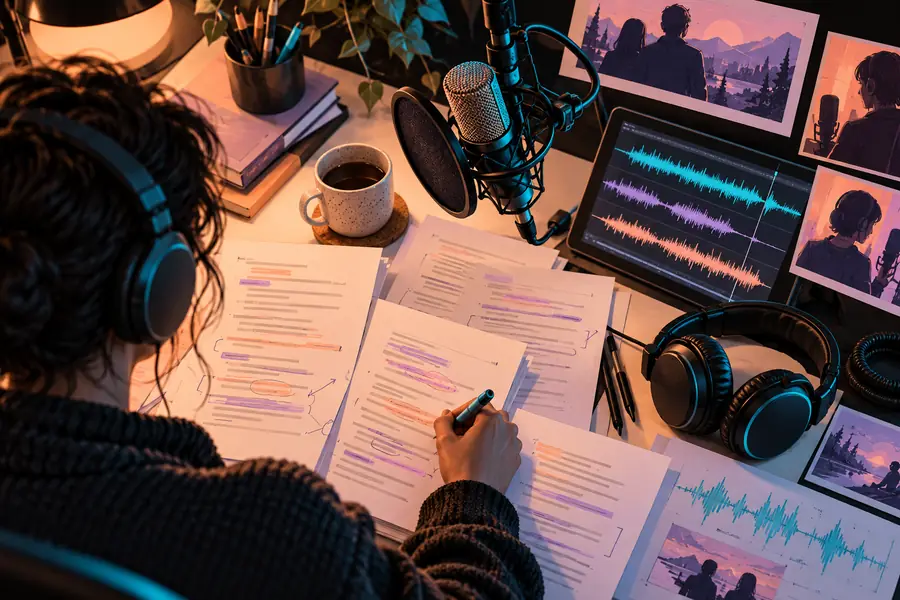
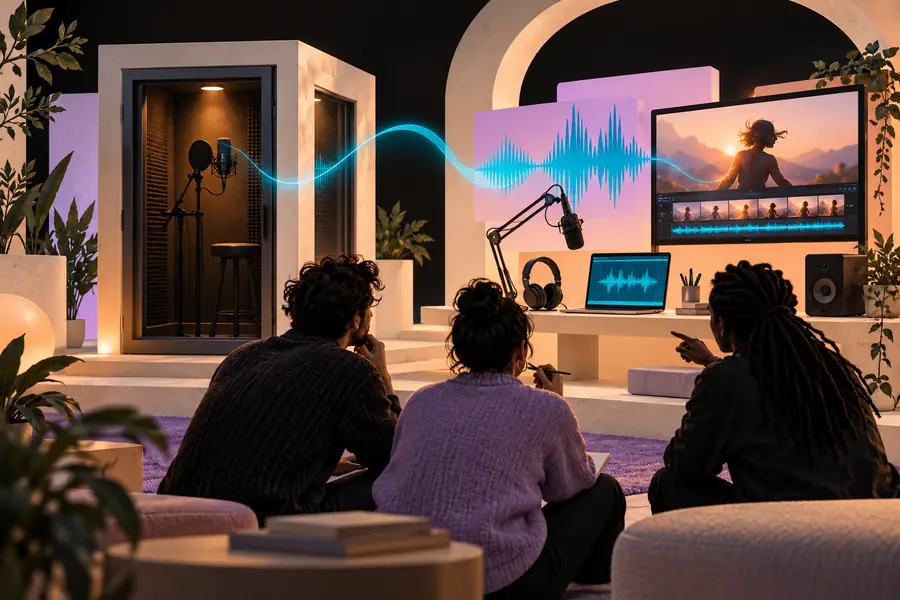
These are workflow illustrations, not recordings or a measured before-and-after result. Time your own test from the moment the script is ready until the audio has been checked and placed in its final project. Include voice selection, generation, retakes, file handling, and editing. A fish audio alternative ai voice option is a time saver only if it reduces that entire sequence for the work you repeat. For a one-off clip, learning a new interface may take longer than finishing with a familiar tool; for a series, a small saving on each approved passage can matter more.
Script and setupReviewed audiowhen switching is worth it
An alternative is worth testing when your current voice misses a requirement you can name: pronunciation, consistent character delivery, a particular narration style, or a workflow that takes too many retakes. Keep Fish Audio in your comparison until you have produced comparable, usable passages in both tools. If neither candidate clearly improves the finished audio or the work required to make it, staying with the familiar process can be a reasonable choice. Before relying on any service for published work, verify its current usage and licensing terms directly.
Switch when the finished work improves
- Write down your quality standard before listening, so an unfamiliar voice does not win merely by sounding new.
- Estimate the cost of usable audio, including retries and the time spent fixing passages that do not meet that standard.
- Test a representative batch if you publish regularly; a single sentence cannot reveal consistency across episodes or scenes.
- Keep a copy of your script and evaluation notes so you can repeat the comparison if your requirements change.
comparison FAQ
Start with a script representative of what you publish, then compare pronunciation, naturalness, consistency, and the time needed to get a usable take. Add the provider's current usage terms and your editing effort to the cost comparison. A strong sample alone cannot tell you how a tool will handle your recurring work.
No single choice follows from the search query alone. A short character line, a long narration, and a frequently updated explainer can expose different strengths and weaknesses. Test candidates against your own script and decide which result meets your publishing standard with acceptable effort.
Use identical text across the tools you are evaluating, including words you expect to be difficult. Listen to full passages rather than isolated highlights, and note every correction needed to make each result usable. If you will publish multiple pieces, repeat the test to check whether the voice remains consistent.
Not necessarily. The relevant figure is the cost of audio you can actually use, not only a displayed price or allowance. Check current terms, then account for retakes, editing, and any time required to change an established workflow.
Keeping your current workflow can make sense when its results already meet your quality bar and another tool has not shown a meaningful improvement in a fair test. Familiarity also matters when deadlines are tight or existing projects need a consistent voice. Revisit the decision when your content, volume, or delivery requirements change.